UB In Memoriam: The Musical Genius D’Angelo
Celebrating the Neo-Soul Trailblazer.
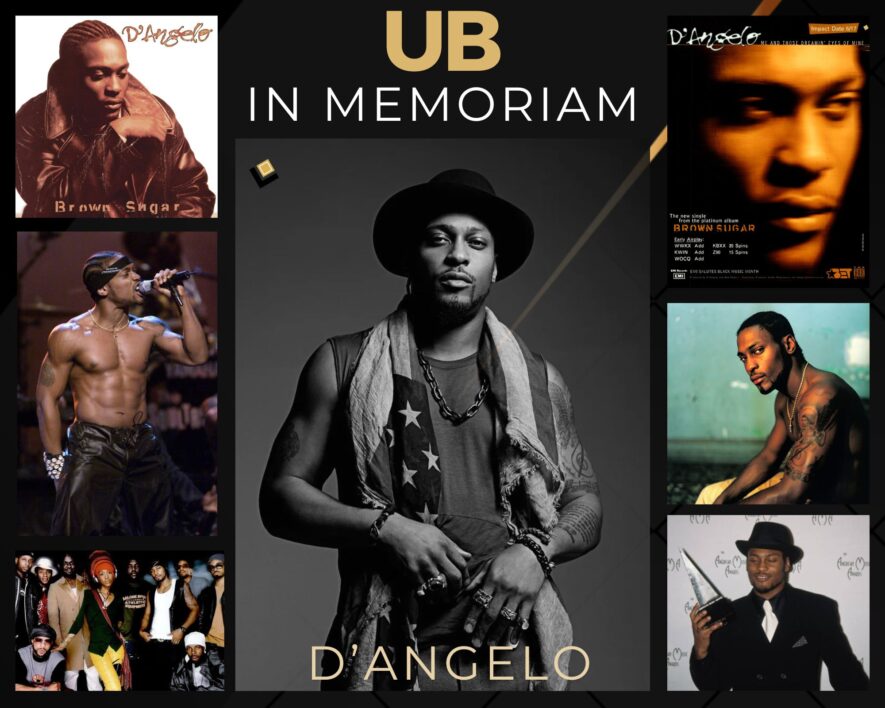
Yesterday October 14th, multi-award-winning singer, songwriter, producer and R&B Icon, D’Angelo passed away at the age of 51.
His son Michael Archer II and Estate released the following statement; “The shining star of our family has dimmed his light for us in this life…After a prolonged and courageous battle with cancer, we are heartbroken to announce that Michael D’Angelo Archer, known to his fans around the world as D’Angelo, has been called home, departing this life today, October 14th, 2025.
We are saddened that he can only leave dear memories with his family, but we are eternally grateful for the legacy of extraordinarily moving music he leaves behind.
“I am grateful for your thoughts and prayers during these very difficult times, as it has been a very rough and sad year for me.” “I ask that you please continue to keep me in your thoughts as it will not be easy, but one thing that both my parents thought me was to be strong, and I intend to do just that.”
Today UB salutes the well respected neo-soul trailblazer D’Angelo!
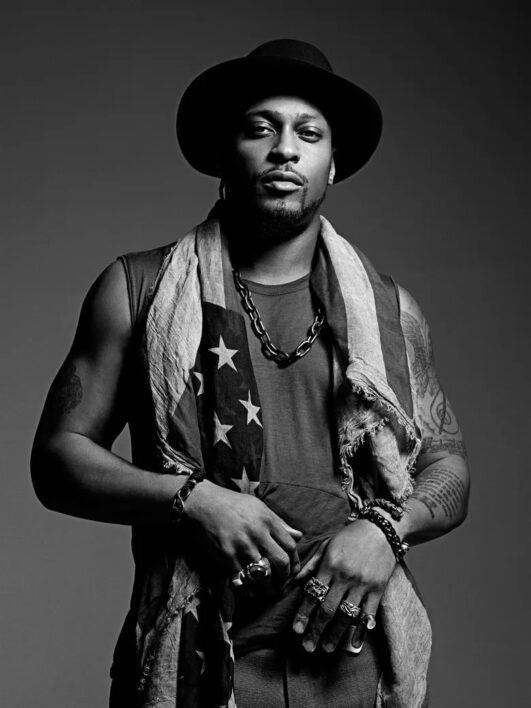
Michael D’Angelo Archer‘s love of music began in Richmond, Virginia, where he grew up in Southern culture in a family and community unified by religion.
There he learned a great appreciation for the gospel music inherent in the church.
His father and grandfather were both Pentecostal ministers, and at an early age he began singing in a church choir.
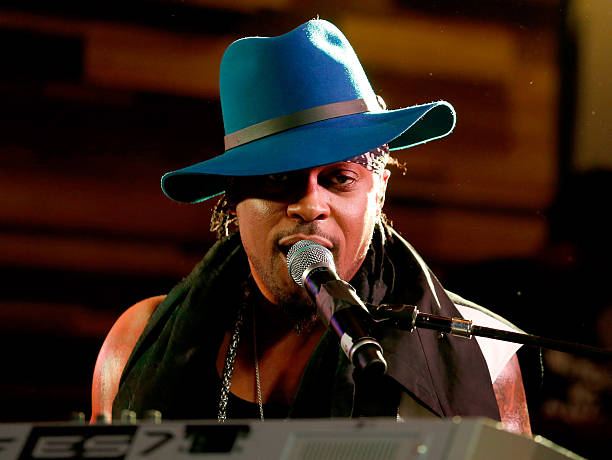
He started learning piano at three. “My oldest brother was playing classical music, and I remember hearing him play ‘Flight of the Bumblebee’ and Bach, and it made me really want to play,” he once recalled. “I used to go to the piano after he finished practicing and bang on it.”
The first two songs he learned to play were Donna Summer‘s “Hot Stuff” and Earth, Wind And Fire‘s “Boogie Wonderland.”
Beginning when he was nine, each Sunday D’Angelo would play the piano and organ at his grandfather’s church, and after a while he directed the choir there, too.
D’Angelo told VIBE of his adult revelation and understanding of his religious background while visiting his grandfather’s church: “I learned that the music part of the service was just as important as the actual preaching. Someone might not be ready to hear preaching, but a song will touch him. Music is a ministry in itself.”
His musical taste was never restricted to church-related music, however.
His mother, Mariann Smith, was a big fan of Marvin Gaye and other soul musicians, and D’Angelo—who has identified Marvin as one of his major inspirations—would spend hours at the piano picking out tunes by such artists or acts as Donna Summer and Earth, Wind and Fire.
His mother had a record collection full of soul and jazz music.
His mom remained involved in her son’s musical career by purchasing for him his first keyboard and critiquing his first songs.
In GQ, she explained, “When he started writing he’d write a song and bring it to me right away. He’d run it by me first. And he knows I will critique him. I’ve always given him the opportunity to express himself, but I’ll tell him what I think.”
In time he became proficient on drums, bass, and guitar and of course piano.
These factors inspired D’Angelo, who drew upon his roots of traditional gospel and soul and adds the sounds of modern R&B and hip-hop to create a unique and soulful sound which has innovated and impressed older and younger musicians alike.
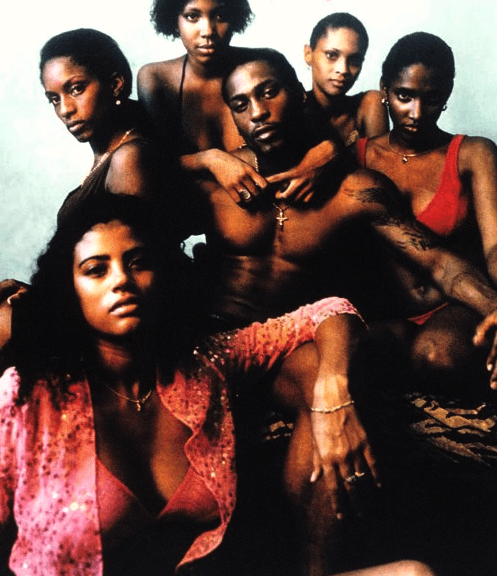
While his older brothers were interested in athletics, such as football, D’Angelo was studying the broad tradition of Black music, readying himself to create his own interpretive yet inventive sound.
From all of the talented and acclaimed musicians D’Angelo heard, Marvin Gaye stood out as his earliest musical mentor.
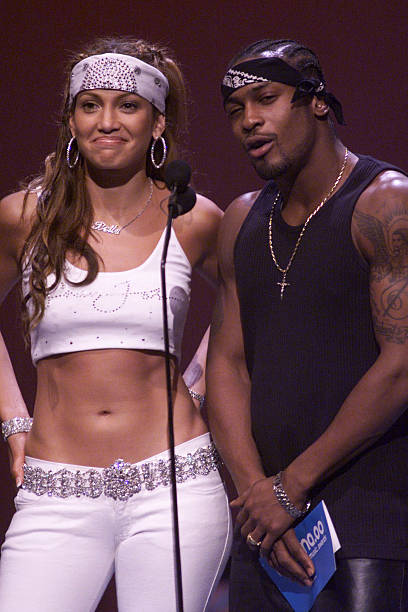
Beyond the musical affinity that D’Angelo had for Marvin Gaye and his work, he also saw in himself a striking resemblance to Marvin, the man.
Both men were intensely involved in their music and both had fathers that were ministers of the church.
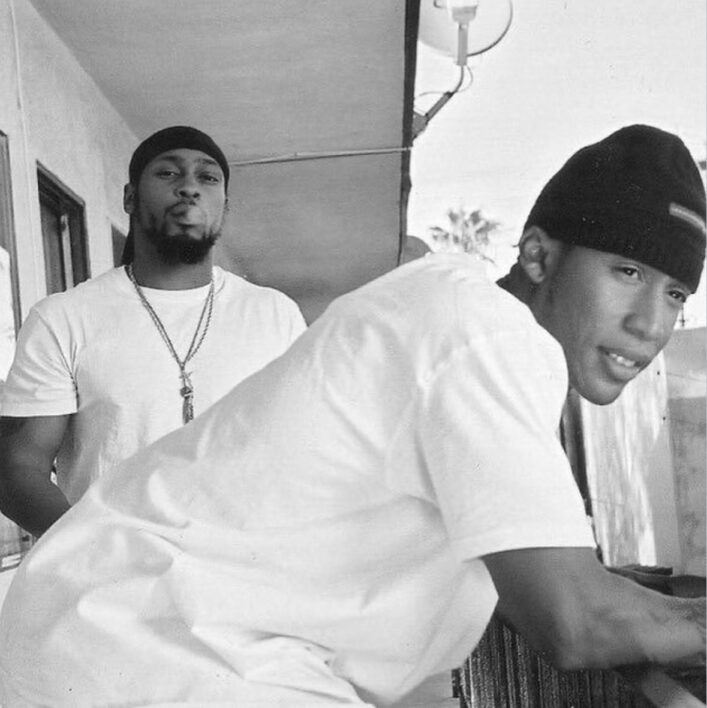
The bond that D’Angelo felt towards Marvin Gaye was so profound that he became distraught following Gaye‘s violent and tragic death.
He experienced continuous nightmares and finally had to undergo therapy.
D’Angelo later acknowledged the connection to Marvin Gaye and his feelings towards other artists of Gaye‘s time. “I don’t think being called a ‘son of soul’ is weird. It’s natural. Anybody who’s coming up now is a son of that stuff or should be. We’re just doing what the fathers were doing back in the day.”
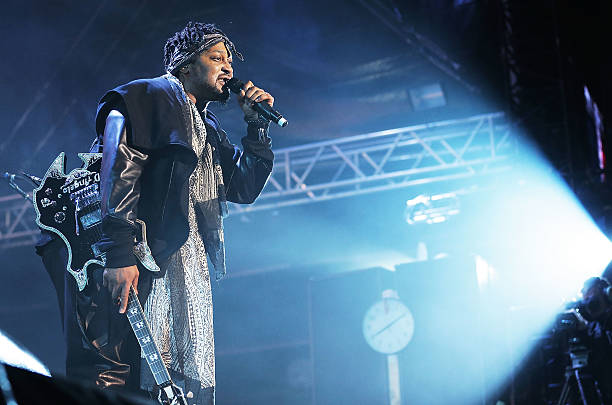
At 16, D’Angelo formed his first band, Michael Archer and Precise, and began singing and writing his first original songs.
They went on to win several local talent shows and play for family reunions and other local events.
The group performed a combination of original material and covers of their favorite Al Green and Smokey Robinson songs.
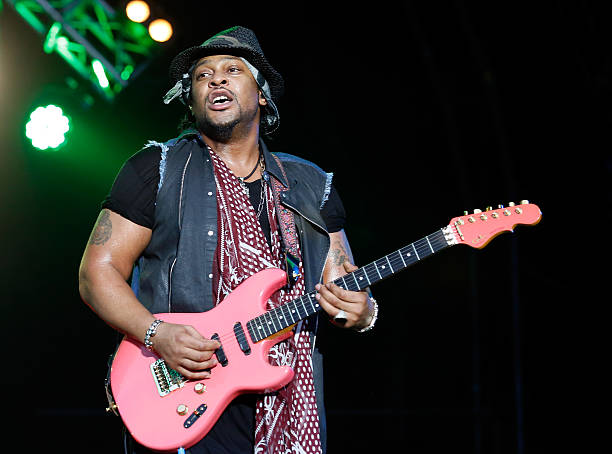
As much as his gospel, jazz, and soul roots inspired him, Prince showed D’Angelo how to create music which was also innovative and original.
In the December 1995 D’Angelo recalled, “I was one of those guys who read the album credits and I realized that Prince was a true artist. He wrote, produced, and performed, and that’s the way I wanted to do it.”
D’Angelo then began to learn other instruments such as drums, saxophone, guitar, bass, and keyboards to enhance his musical style and expertise.
This latter aided him in the production of his own music and other artists’ work.
His dedication to playing all of his own instruments also makes him an innovator because he does not rely on sampling other artist’s music for more lush melodies or heavier rhythms.
Along with Prince, hip-hop also influenced D’Angelo as modern music with a feel for the music of his forefathers. “Rakim and KRS-One were my heroes. We used to [have rap competitions] in the bathroom during high school, and I used to call myself Chilly Chill. That stuff is definitely still in me too. All rap is street soul. They just have a different method,” D’Angelo stated.
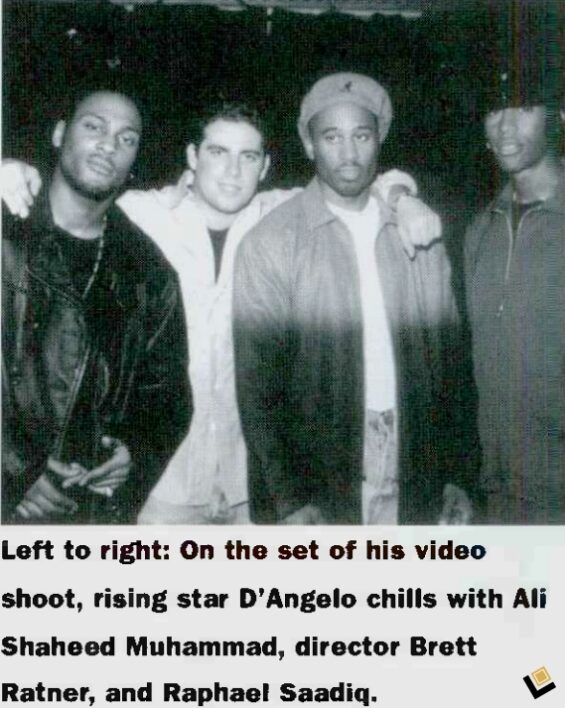
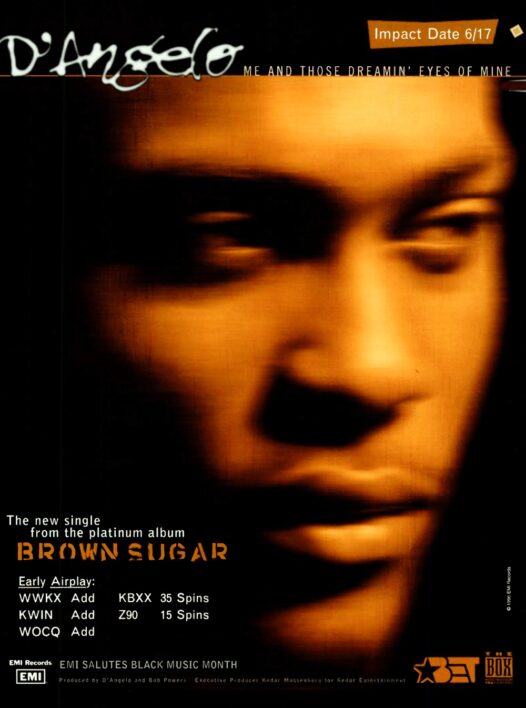
D’Angelo‘s earliest affinity with hip-hop continued into his professional debut through the help of Ali-Shaheed Muhammad from A Tribe Called Quest who co-produced “Brown Sugar.”
Between the ages of 17 and 18, he wrote most of the material which would later appear on his “Brown Sugar” debut album.
At a school talent show, he was spotted by a local talent scout who got him an appearance on Showtime At The Apollo.
Archer used all of his musical experience and inspiration to lead him to three big wins on “Amateur Night” in 1989.
He sang Peabo Bryson‘s “Feel The Fire” and Johnny Gill‘s “Rub You the Right Way.”
With the money and exposure gained from these wins, D’Angelo bought more equipment, quit school, and moved to New York at age 18.
D’Angelo called Warner Chappell Music his second home for the week he was there.
It was there that he befriended Jocelyn Cooper Gilstrap, who became his publisher and established Midnight Music Publishing. “She was the first person I played for,” he recalled. “For two hours, I played whatever songs she called out. Since I listen to a lot of old soul, I had the songs memorized.”
Though D’Angelo tended to be shy about playing for people one-on-one, Cooper “didn’t have to ask him twice,” he said. “That’s what I had come to New York for.”
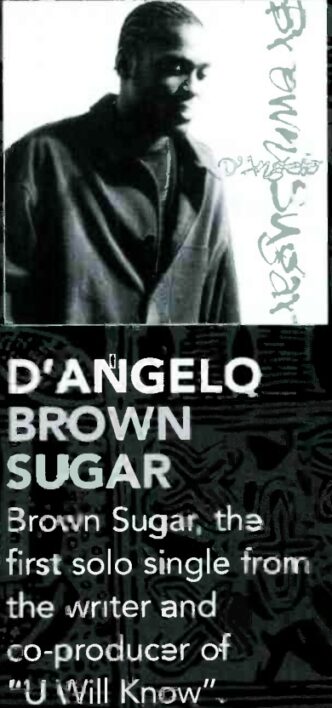
Shortly after Cooper passed his demo along, after a three-hour impromptu piano recital for an EMI record executive, D’Angelo was signed and prepping the release of his first song, “U Will Know.”
The lead single from the “Jason’s Lyric” soundtrack.
He produced and co-wrote the song with his brother Luther for the Black Men United Choir which included great contemporary R&B artists such as Stokley, Boyz II Men, Tevin Campbell and Lenny Kravitz on guitar.
When his song was chosen for the soundtrack, D’Angelo was “definitely shocked…,” “I wrote that with my brother Luther when I was 17, and my voice had outgrown it, so I wanted Tevin Campbell to sing it.”
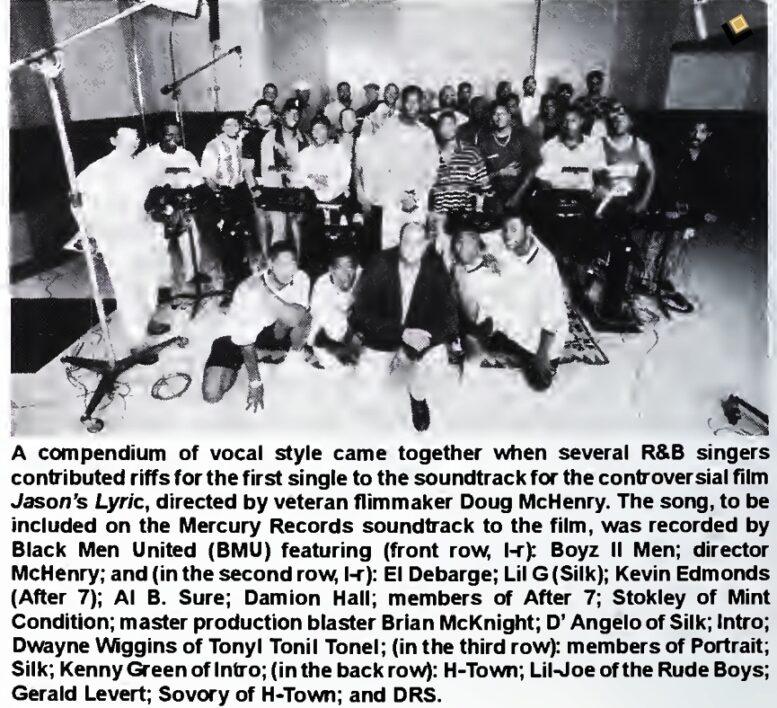
Ironically, Tevin sings the first few lines of the moving coming-of-age tale, which became D’Angelo‘s first gold single.
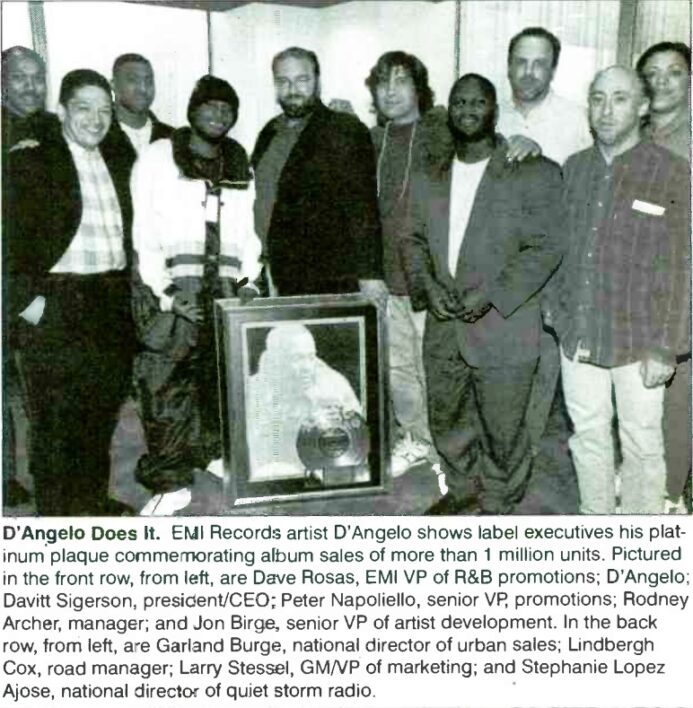
July of 1995 was finally the time for the release of D’Angelo‘s debut double platinum album, “Brown Sugar.”
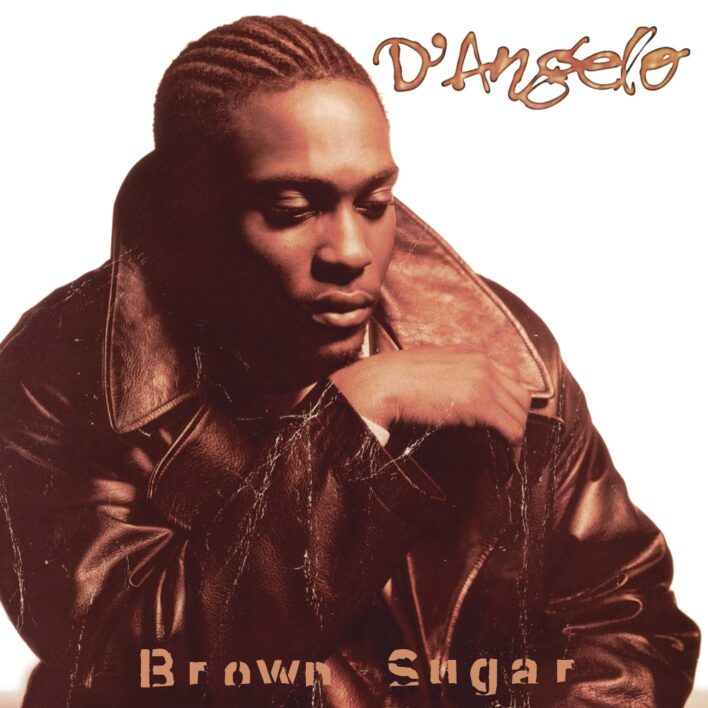
Among the artist’s collaborators were A Tribe Called Quest‘s Ali Shaheed Muhammad, Tony Toni Toné‘s Raphael Saadiq, and Angie Stone.
Taking after Prince, another of his favorite musicians, D’Angelo played nearly all the instruments on the album.
The songs, most of them lean and stripped down, without complex orchestrations, are dominated by throbbing drum beats and bouncy bass lines and are punctuated by D’Angelo’s electric-piano riffs and splashes of guitar.
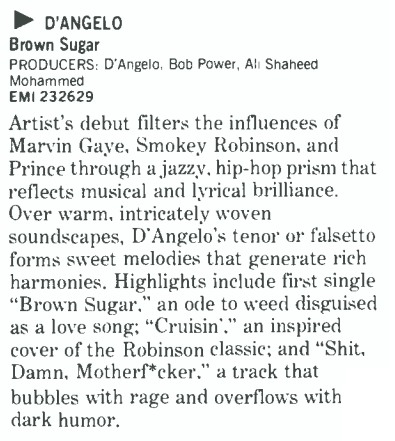
Overshadowing the instruments, D’Angelo crooned in his smooth, buttery style, often soaring into a falsetto, as in the album’s title track, a veiled tribute to marijuana that became a hit single.
Most of the songs, however, are about traditional romances, in the style of classic soul music.
D’Angelo‘s then manager, Kedar Massenburg, stated that creating an enduring project wasn’t easy and pointed to the unique duality surrounding the enterprise as one reason for its from the ground-up success; “D’Angelo became legit in the R&B mainstream with `You Will Know’, which he wrote and produced. But he earned credibility on the streets with `Brown Sugar,’ a metaphoric song that was initially billed as an anthem to pot smokers by featuring the image of a marijuana leaf on the front of the [promotional] product.”
“But the song could also be interpreted as a romantic ode to the ladies,” he continued, “and once it began catching on in the mainstream, we backed off from the street interpretation.”
There was also some calculated ambiguity regarding the artist’s image.
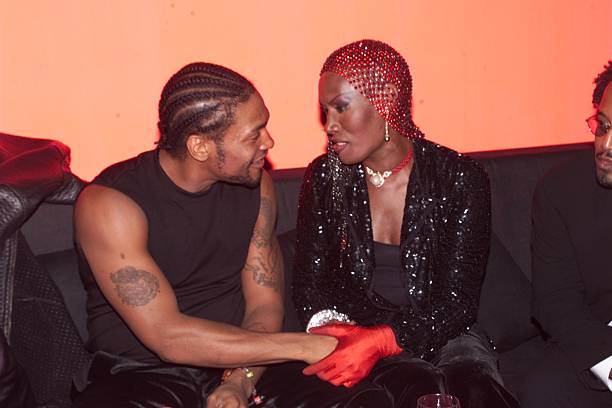
D’Angelo‘s vocals and lyrics have an understated quality to them, but he looked street hard, which contributed to the disparity surrounding who he was.
“We wanted to set him apart from other R&B artists, so we had him dress like an ordinary kid from down the block, but we added a few intangibles to create a mystique, so he wasn’t completely accessible.”
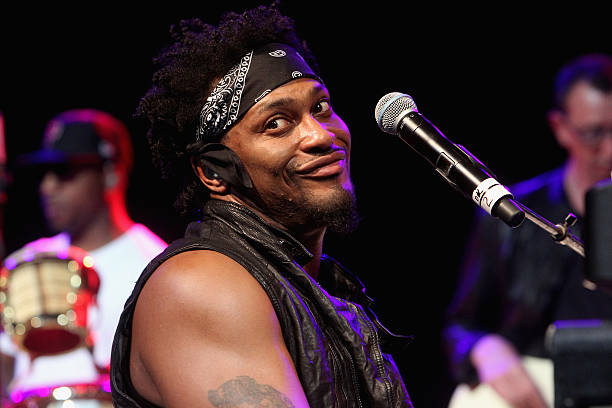
D’Angelo explained his musical aspirations; “I just want to make some dope black music, some good soul music. I could not care less about a hit song. This is only my first album. I feel like I’m growing musically, that now I know what I want to do, and how better to do it. I just want to keep elevating my music to a new level.”
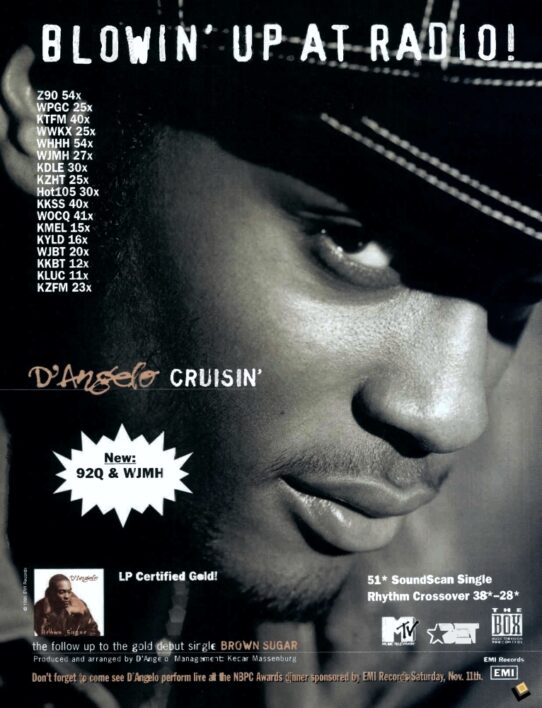
The album had three crossover R&B/pop hits with “Brown Sugar,” the gold-selling first single; “Cruisin,” the remake/tribute to Smoky Robinson; and “Lady,” which hit #1 on the Billboard R&B chart and #5 on the pop chart.
His credits under D’Lo Music (his production outlet nicknamed after him) grew.
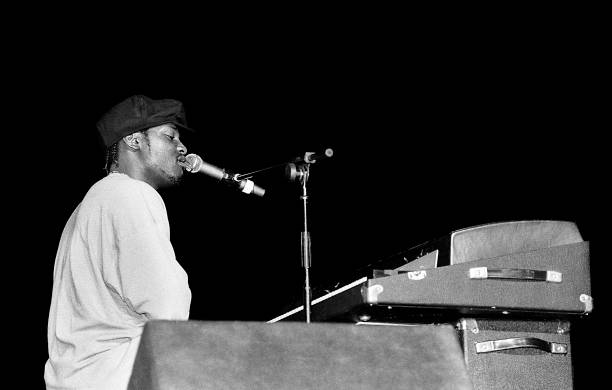
He described his creative process simply, “I try to write what other people try to sample. I’m into natural sounds with wet, warm, soft textures. I like to add a little wah-wah to make ’em drip.”
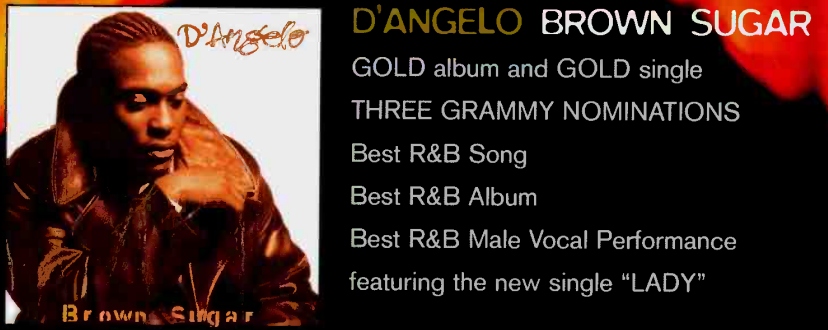
From start to finish, D’Angelo‘s voice dances at its own pace, at turns sighing and soaring with magnetic purity and conviction.
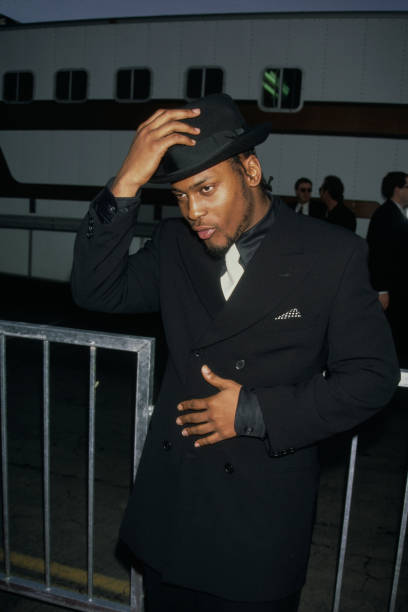
At age 21, D’Angelo made his debut performance in support of “Brown Sugar” at the Supper Club in New York City where crowds of celebrities such as Wesley Snipes, Snoop Doggy Dogg, and Salt-N-Pepa gave their enthusiastic approval to the young musician.
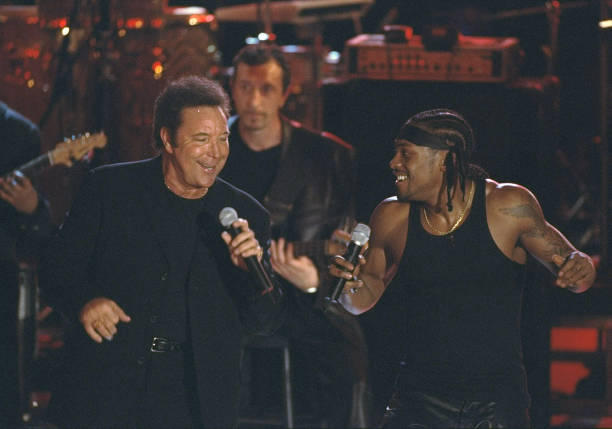
The anticipation of D’Angelo‘s debut was so big that his hero, Prince was not allowed into the celebrity-packed theater.
His debut performance at the Supper Club made an impressive mark on his new audience of musical peers as well as many other celebrities and R&B and hip-hop fans.
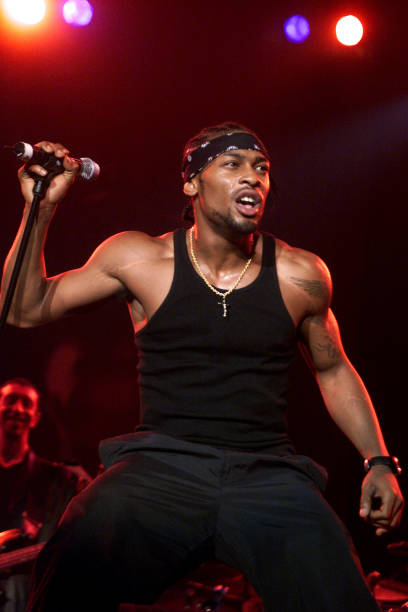
D’Angelo‘s stage performance rivals only his unprecedented studio work.
Some of the songs he covered live were “Can’t Hide Love” by Earth Wind & Fire, the Ohio Players “Sweet Sticky Thing,” and “Give Me Your Love” from Curtis Mayfield.
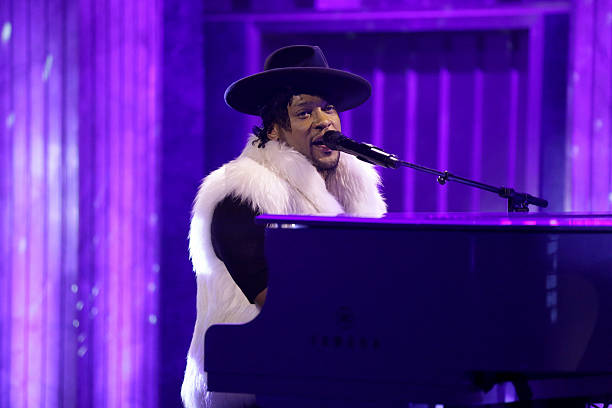
D’Angelo honed his show on some legendary stages.
He performed at the 1996 Grammy ceremonies where he appeared with Tony Rich singing and performing a duet in tribute to Stevie Wonder.
D’Angelo also performed at the 1996 Essence Awards with Smoky Robinson where they performed “Cruisin” together.
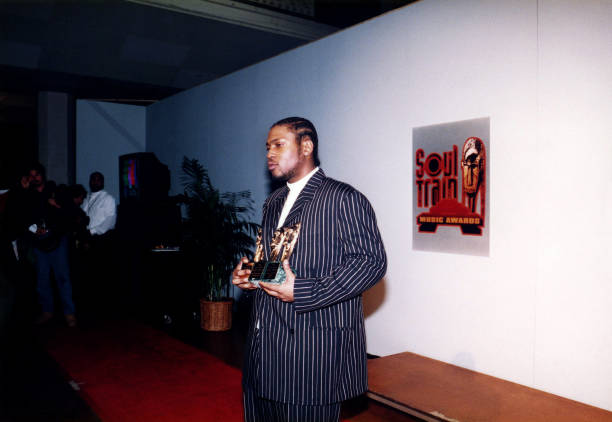
In addition, he appeared on the Late Show with David Letterman, NY Undercover, and Soul Train during his debut era.
Along with working on more of his own music, D’Angelo continued to do production work for artists such as the Boys Choir of Harlem, Brandy, SWV, The Roots, Mary J. Blige, and Vertical Hold.
He also did music and production work on some movie soundtracks, including Get on the Bus, High School High, and Space Jam.
D’Angelo was recognized by his peers with numerous award nominations for best new R&B artist and/or song, including three Soul Train Music awards in 1996, four NAACP awards in 1996.
Plus three Grammy nominations in 1996 and one in 1997, and also another nomination in 1996 for the MTV Music Awards.
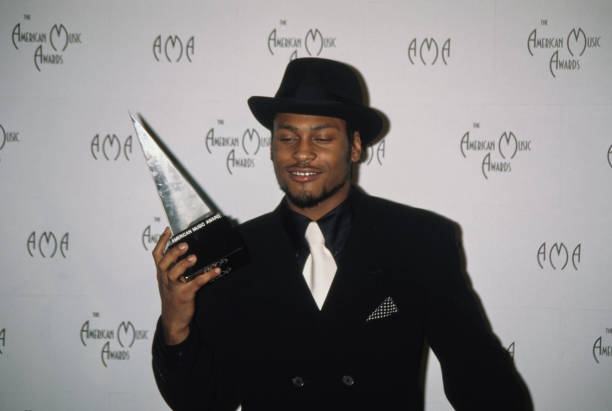
In 1997 he won an American Music Award for Best New R&B Artist.
“Brown Sugar” positioned him and several other young musicians at the time such as Maxwell, Me’shell Ndegeocello, Omar, and Dionne Farris, as innovators of contemporary Black music.
D’Angelo‘s success gave other label A&R executives the ammunition they needed to sign artists that don’t fit conveniently into the R&B/hip-hop mold.
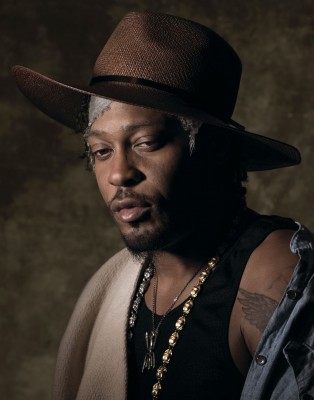
Unlike their hip-hop counterparts who sample music from vintage R&B artists, the new soul acts are utilizing their own skills as songwriters, producers, and musicians.
The Soulquarians was formed by him in 1999, with Erykah Badu, Bilal, Common, Roy Hargrove, Talib Kweli, Mos Def, Pino Palladino, James Poyser, Q-Tip, Questlove and J Dilla.
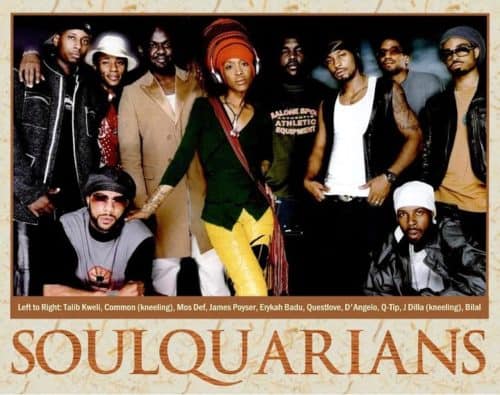
In the late 1990s and early 2000s, members of the collective held jam sessions, while recording their respective albums at Electric Lady Studios in New York.
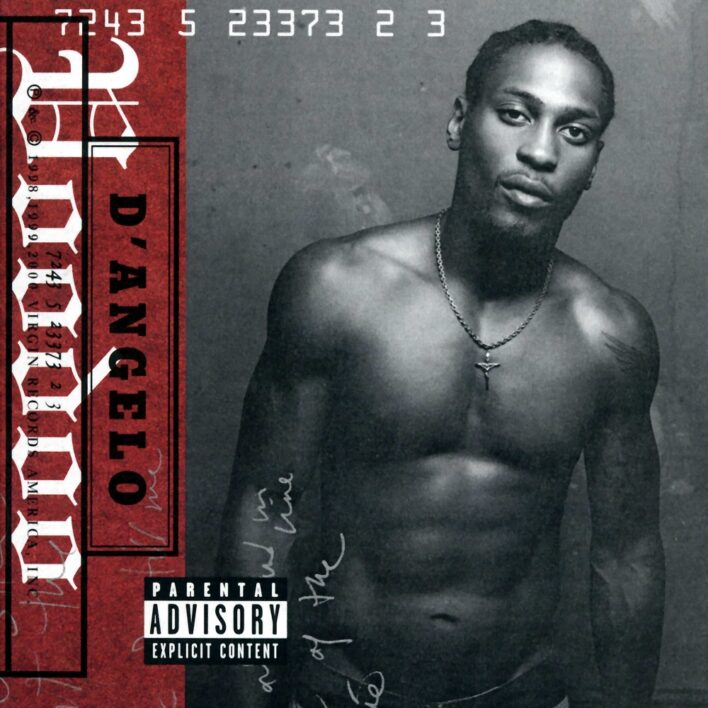
D’Angelo’s long-awaited sophomore effort, “Voodoo” was released in 2000, featured the smooth vocals—delivered in his famed falsetto—and solid instrumentation that characterized its predecessor, while offering more improvisational nuances.
Although he was not recording during those five years, D’Angelo was not inactive.
In 1996 a recording of his concerts, Live at the Jazz Café, was released overseas by EMI.
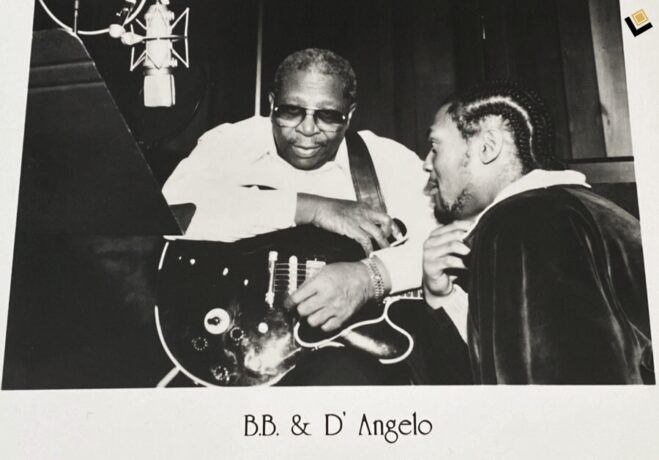
He was a guest on B.B. King’s album “Dueces Wild” in 1997 and on “The Miseducation of Lauryn Hill” in 1998 on the classic “Nothing Even Matters.”
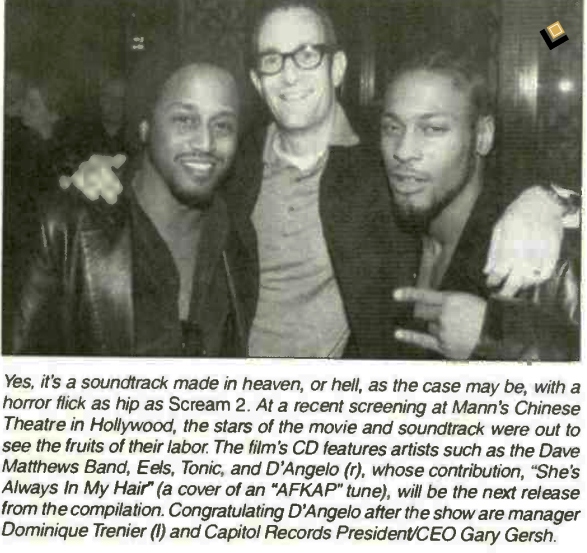
He also contributed to the soundtrack albums for the films Scream 2 (1997), Belly (1998), and Down in the Delta (1998).
In February 1997 his son, Michael, was born with fellow R&B artist, the late great Angie Stone.
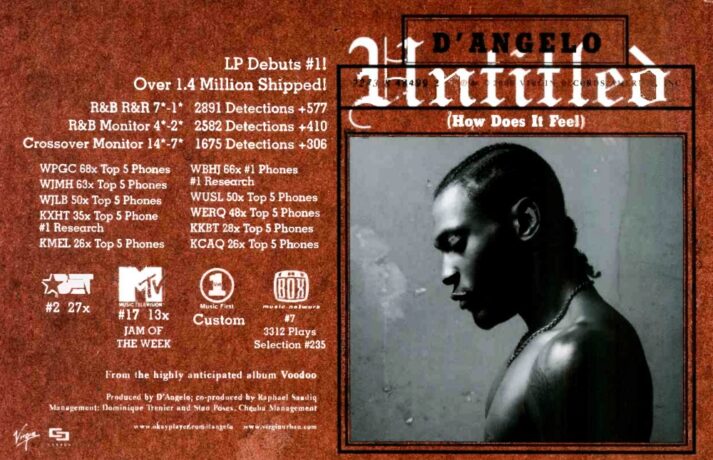
Some critics speculated that “Voodoo” was more experimental character and lack of hooks might keep the album off the charts, but it has turned out to be at least as commercially successful as “Brown Sugar.”
The album had a looser, more improvisational feel than “Brown Sugar.” “A lot of stuff is live and it’s the first take,” D’Angelo explained. “We’d come in and just tape for hours and hours and just play and play, and I would pick the best of the batch and write the song to the jam session. A lot of what you are hearing is just us up in [the studio] jamming.”
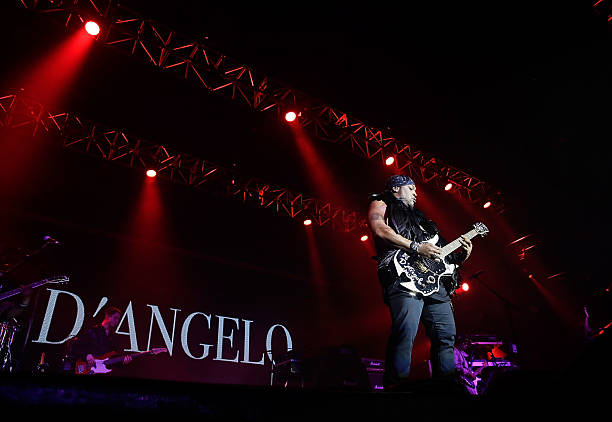
Whereas “Brown Sugar” was largely a solo effect, on “Voodoo” D’Angelo collaborated with a half-dozen artists, among them the drummer Ahmir (“?uestlove”) Thompson, the trumpeter Roy Hargrove, and rappers Q-Tip, Method Man, and Redman. “There’s strength in numbers, especially with what we’re doing,” D’Angelo told Davis. “We all share like-minded visions, so it’s important for us to network, to get together and to talk and vibe and play together.”
“Voodoo” also offered a larger musical palette than “Brown Sugar,” “Spanish Joint,” for example, careens through syncopated Latin rhythms enriched by a jazzy bass line and the trumpet work of Roy Hargrove.
“Devil’s Pie” eschews prominent vocal melodies for a laid-back, funky groove and low-key singing.
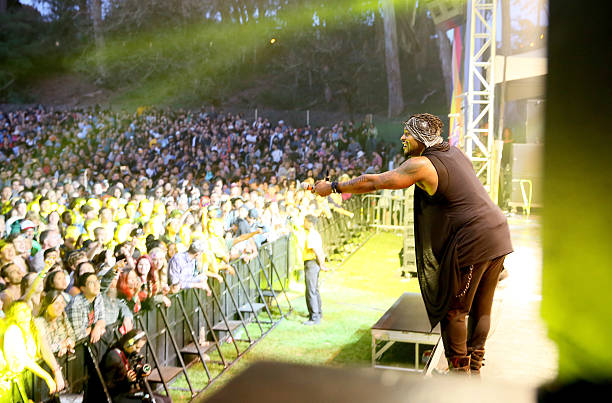
In Voodoo’s lyrics, D’Angelo dealt not only with the topic of romance but also with faith and fatherhood, the latter of which he experienced anew with the birth in the fall of 1999 of his daughter, Imani.
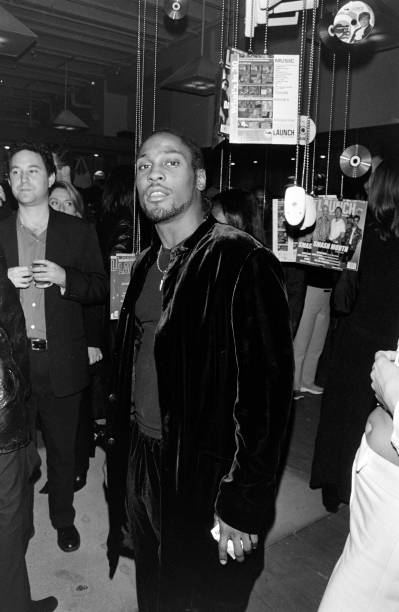
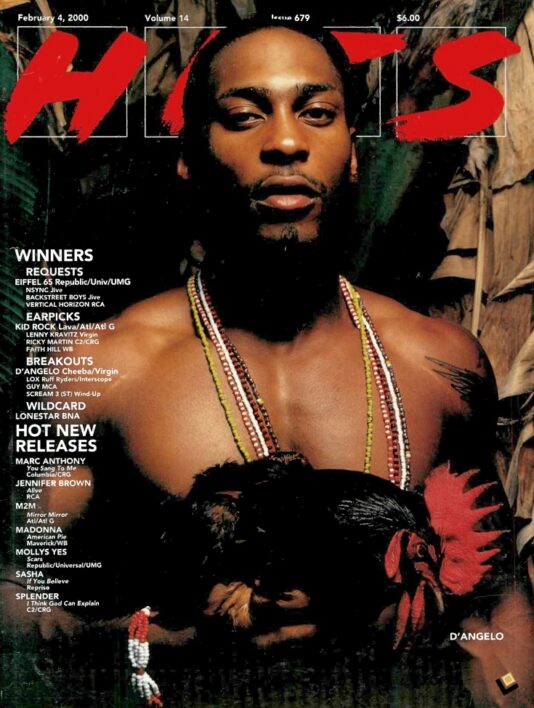
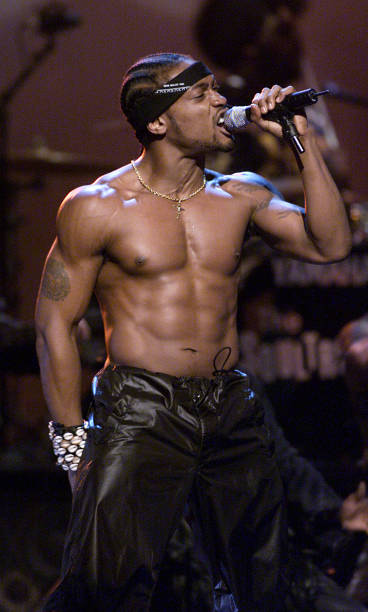
The publicity surrounding “Voodoo” was greatly escalated, and almost overshadowed, by the video for the single “Untitled (How Does It Feel),” in which D’Angelo, nude from the waist up and looking muscular and fit, stands against a black background and sings about love.
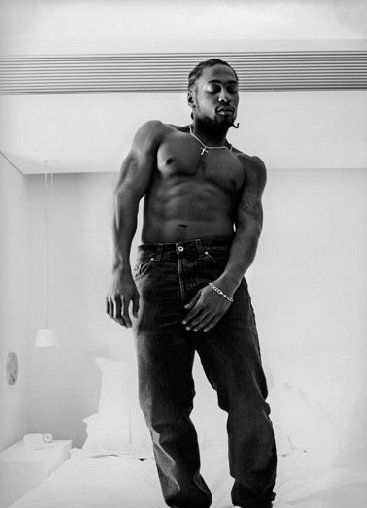
The clip earned three nominations for the 2000 MTV Video Music Awards, including Video of the Year, Best R&B Video, and Best Male Video.
Most critics agreed, however, that “Voodoo” offered a lot more than D’Angelo’s highly marketable image.
By the middle of 2000, “Voodoo” had sold more than 1.3 million copies and had earned D’Angelo three nominations for the 15th annual Soul Train Music Awards, held in 2001.
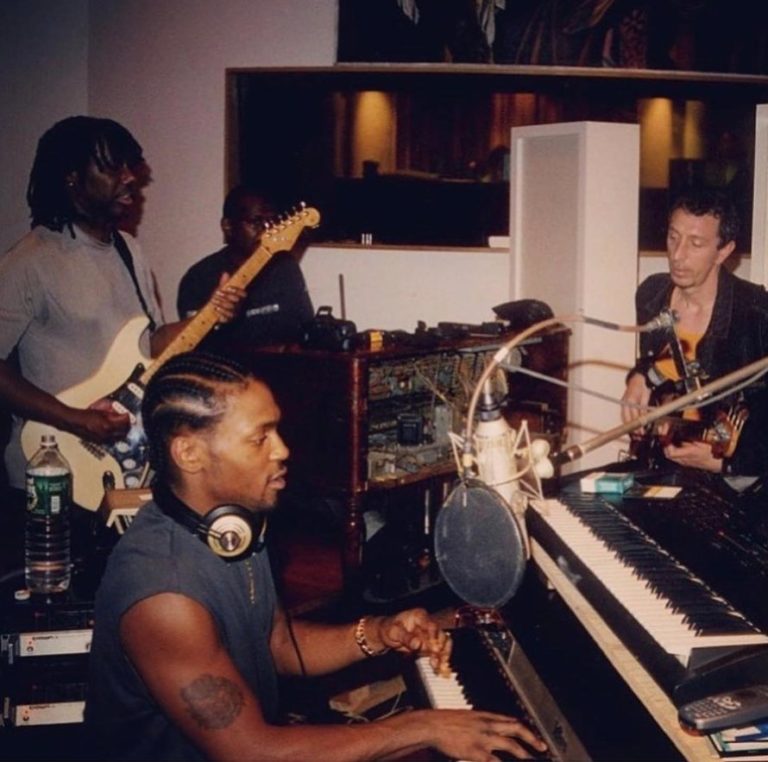
In early 2001 D’Angelo remained at the forefront of the “new soul” movement that he helped to create.
D’Angelo‘s subsequent solo work was extensively delayed.
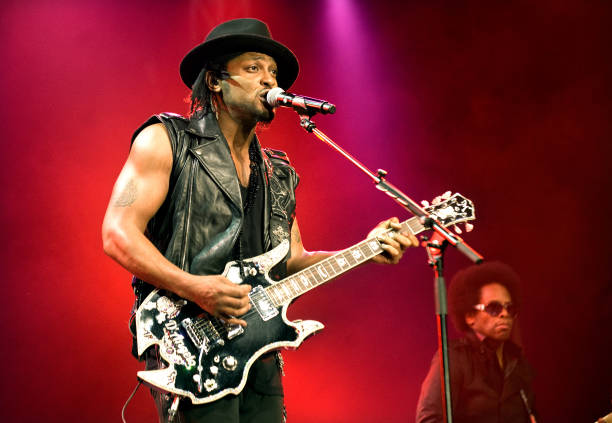
In late November 2011, D’Angelo returned and announced a series of 2012 European tour dates.
His long-awaited third album release, “Black Messiah” was released in 2014. The album climbed to #1 on the Billboard Top R&B/Hip-Hop Albums chart.
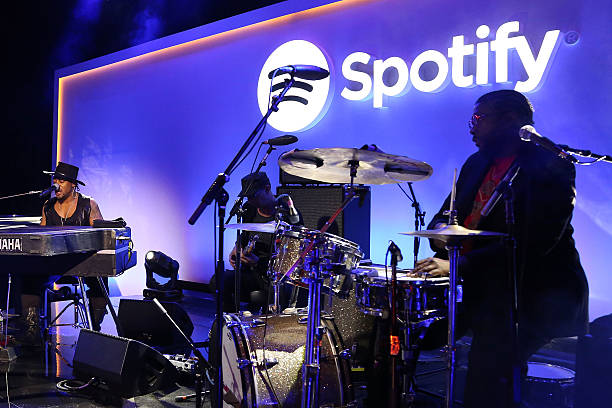
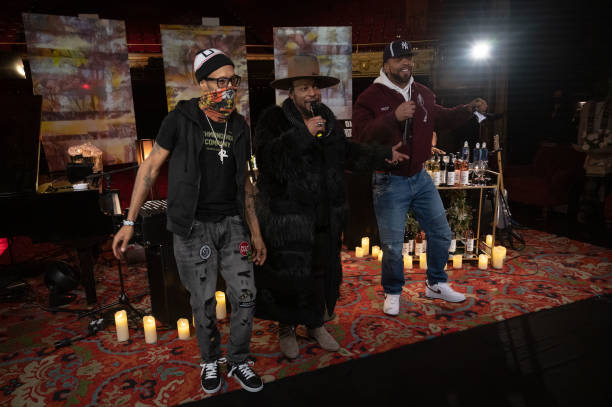
In 2021, he performed at the Apollo Theater, as D’Angelo Vs Friends. Featuring Keyon Harrold, Method Man & Redman, and H.E.R.
In 2024, appeared with Jay-Z on “I Want You Forever” from the soundtrack “The Book of Clarence.”
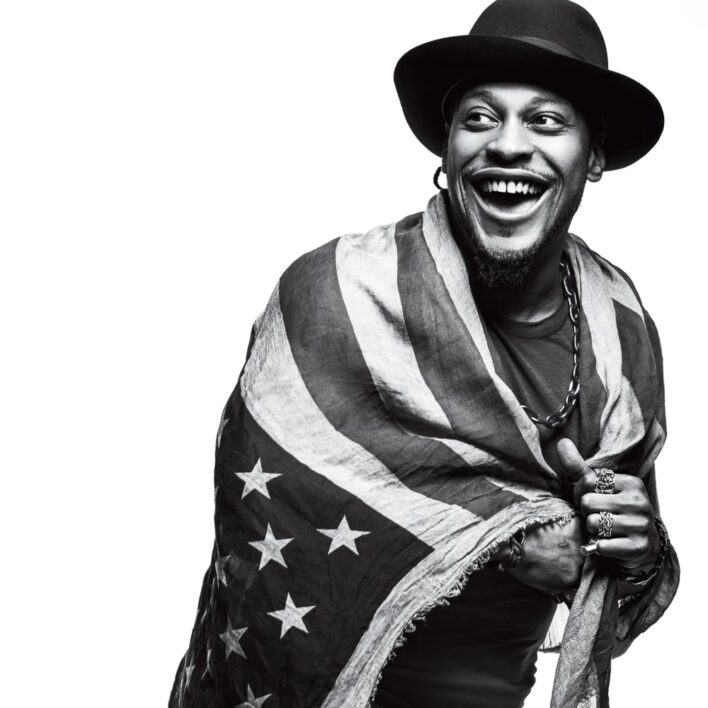
UB Sends Our Condolences to The Family, Friends and Fans of D’Angelo!